

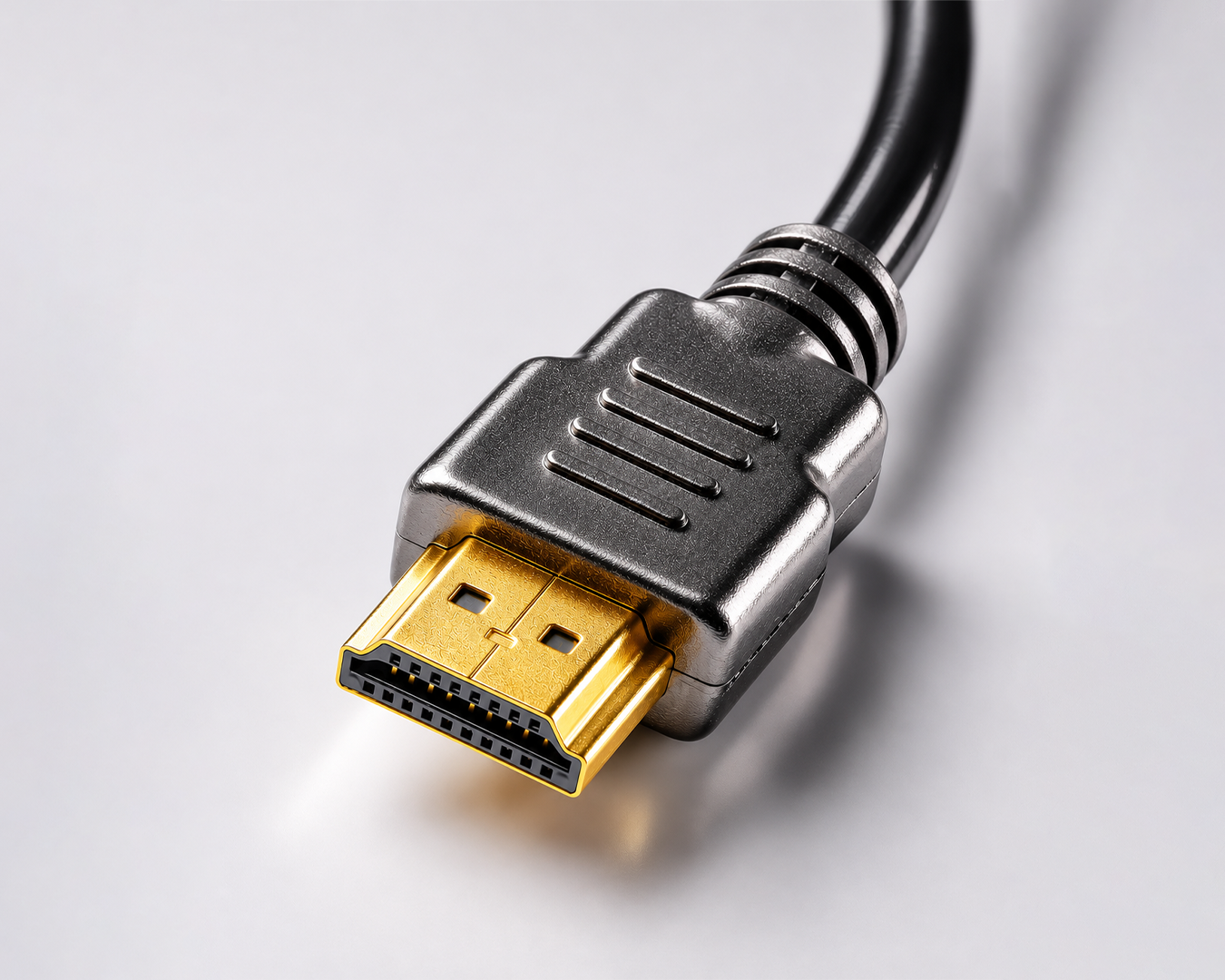
What Is a Gold-Plated Connector? Why It Matters for Your Cables
Introduction
If you've ever shopped for an HDMI, USB, or audio cable, you've probably noticed the term "gold-plated connector" listed as a feature. It sounds premium, but what does it actually do — and is it worth paying attention to when choosing a cable? This article breaks down what gold-plated connectors are, why manufacturers use them, and how they can affect the performance and lifespan of your cables.
What Does "Gold-Plated Connector" Mean?
A gold-plated connector refers to a cable's metal connector pins or contacts being coated with a thin layer of gold over a base metal, typically copper or brass. The gold layer itself is usually very thin — often just a few microns — but it serves an important functional purpose rather than just a cosmetic one.
Why Manufacturers Use Gold for Connectors
Gold isn't chosen for cable connectors because it's a precious metal — it's chosen because of its specific physical properties that make it ideal for electrical contacts.
1. Excellent Corrosion Resistance
Gold does not oxidize or tarnish the way many other metals do. Connectors made from bare copper or other metals can develop a thin layer of oxidation over time, which increases electrical resistance and can degrade signal quality. A gold-plated surface stays clean and conductive far longer, especially in humid or frequently handled environments.
2. Strong Electrical Conductivity
Gold is a highly efficient conductor of electricity. While copper itself is also a strong conductor, the gold plating helps maintain consistent conductivity at the connector's surface, where corrosion or wear would otherwise be most likely to interfere with signal transfer.
3. Durability Through Repeated Use
Cables get plugged and unplugged repeatedly over their lifespan. Gold plating helps the connector resist wear from this repeated friction, helping maintain a solid, reliable connection even after many insertion cycles.
4. Stable Signal Transmission
For high-bandwidth applications — such as HDMI cables carrying 4K or 8K video — even small amounts of resistance or signal interference at the connector can affect picture quality, especially over time as connectors are used repeatedly. A stable, low-resistance gold-plated connection helps preserve signal integrity.
Does Gold Plating Improve Audio or Video Quality Directly?
It's worth setting realistic expectations here. Gold plating itself doesn't inherently make a digital signal "sound better" or "look sharper" in isolation — the data being transmitted (audio or video) is the same regardless of connector material. What gold plating does is help maintain a clean, low-resistance connection over time, preventing degradation that could otherwise occur due to corrosion or wear. In other words, it's less about boosting quality and more about preserving consistent performance and reliability throughout the cable's lifespan.
Gold-Plated Connectors vs. Standard Connectors
| Feature | Gold-Plated Connector | Standard (Uncoated) Connector |
|---|---|---|
| Corrosion Resistance | High | Lower, prone to oxidation over time |
| Conductivity Stability | Consistent over time | Can degrade with exposure and wear |
| Durability with Repeated Use | Higher resistance to wear | More susceptible to connection wear |
| Long-Term Reliability | Better suited for frequent plugging/unplugging | May degrade faster in humid or high-use environments |
When Does Gold Plating Matter Most?
Gold-plated connectors are particularly valuable in situations involving:
- High-bandwidth data transfer, such as 4K or 8K HDMI video, where signal integrity matters
- Frequent connecting and disconnecting, such as cables used with portable devices or shared equipment
- Humid or variable environments, where corrosion risk is higher
- Long-term use, where you want a cable to maintain performance over years rather than months
Conclusion
Gold-plated connectors aren't just a marketing buzzword — they offer real, practical benefits in terms of corrosion resistance, conductivity stability, and long-term durability. While they won't change the underlying digital signal being transmitted, they help ensure that signal arrives consistently and reliably, connection after connection, year after year.
If you're investing in a cable for a high-resolution display setup, home theater system, or gaming console, a gold-plated connector is a small detail that can make a meaningful difference in long-term reliability.
Looking for a High-Quality HDMI Cable with Gold-Plated Connectors?
If you're setting up an 8K display, gaming console, or home theater system, the ONTEN OTN-HD183 HDMI 2.1 Cable is built to deliver exactly the kind of long-term reliability discussed above. With gold-plated connectors, a 48Gbps bandwidth, and support for up to 8K 60Hz resolution, this cable is designed for users who want both performance and durability.
ONTEN OTN-HD183 Key Features:
- HDMI 2.1 standard for the latest high-resolution displays
- 48Gbps bandwidth for smooth, high-quality data transmission
- Up to 8K 60Hz resolution support
- Gold-plated connectors for corrosion resistance and long-term reliability
- Braided cable construction for added durability and tangle resistance
- Metal alloy moulding for a sturdy, premium build
- Available in Green
Upgrade your home theater, gaming setup, or workstation with a cable built to last — choose the ONTEN OTN-HD183 HDMI 2.1 Cable today.
ONTEN OTN-UC125 5-in-1 USB-C Hub Review: HDMI, LAN & PD3.0 Charging Guide
ONTEN OTN-95107 Laptop Stand Docking Station Review: 9-in-1 Dual HDMI Hub Guide